
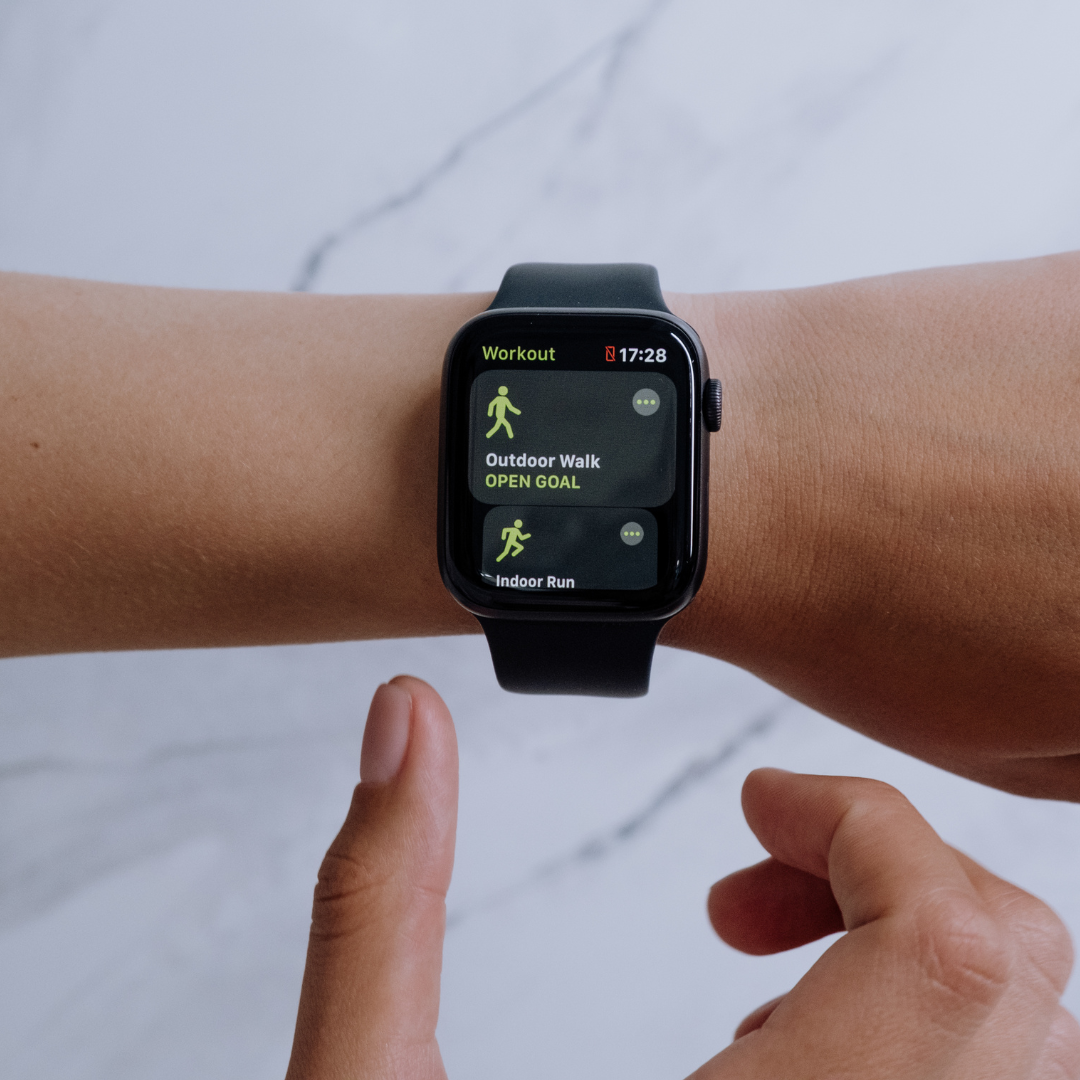
Are smart watches truly making us healthier? With their growing popularity, it’s easy to assume that simply wearing one will lead to better health.
Despite the hype, many people are unsure about the actual benefits of smartwatches. Conflicting information and varying study results add to the confusion about their impact on long-term health.
I want to dive into the research to reveal whether smart watches really influence health behaviours.
TL;DR
The evidence suggests that using a smart watch can significantly increase your daily steps and moderately-intense exercise levels. But, the impact on long-term health outcomes like lower blood pressure or better cholesterol levels is less certain 1,2. The good news is that they don’t seem to do any harm.
For the purpose of this article, I will be using smart watches and activity trackers interchangeably. The scientific studies typically use the term “consumer-grade activity trackers” in their research, and for the general population, that most likely means a smart watch (although rings and other wearables are becoming increasingly popular).
The Evidence for This Article
I’ll only be citing umbrella reviews. These are evidence reviews of systematic reviews. On the hierarchy of scientific evidence, systematic reviews are considered the strongest type of evidence because they involve screening and assessing many (sometimes hundreds to thousands) of individual studies on a topic. So, looking at umbrella reviews lets us indirectly assess all of the individual studies systematic reviews assessed. For example, one study published in The Lancet looked at a total of 163,922 people1. Also, umbrella reviews are essentially systematic reviews of systematic reviews, which I think is very meta.
What is “Exercise” to a Smart Watch?
Before diving in, it’s important to note that “exercise” tracking on a smart watch is mainly made up of two different measures: step counts and using heart rate to determine exercise intensity. We need to pay attention to both these values together to get a more accurate measure of someone’s behaviour as told by a watch.
Effects of Smart Watches on Exercise
The umbrella reviews found that in the general adult population, there is consistent evidence that wearing an activity tracker significantly increased step counts and the amount of moderately intense exercise1,2. Both reviews, however, differ on the amount of improvements. One review reported an average increase of 1,800 steps and 40 minutes of exercise a day1. The other reported a median increase of 1,300 steps a day and an increase of 60 minutes of exercise a week2.
This is a huge discrepancy between the two reviews on the impacts of activity trackers and moderately intense exercise. This tells me that the evidence for this is less conclusive compared to the results for step counts.
Effects of Smart Watches on Clinical Measures
Although there is strong evidence that smart watches lead to increased physical activity, this doesn’t always translate clinically. Evidence suggests that activity trackers can cause weight loss, with one review suggesting an average of 2 pounds of weight loss. However, it’s unclear whether the weight loss can be sustained1.
For measures like blood pressure, cholesterol, and blood sugar, although there’s some evidence that shows improvements for activity tracker wearers, the evidence isn’t statistically significant1.
We could potentially infer that since there is strong evidence for increased daily steps, and that increased steps have been shown to reduce the risk of many chronic diseases, smart watches might lead to reduced chronic diseases. However, this might be an inaccurate extrapolation.
Keep in mind, steps on many smart watches are based on wrist movement, which can sometimes lead to inaccuracies. For example, someone might be moving their arms while seated, which the smart watch may count as steps. This might be one explanation for why we’re not seeing physiological improvements with increased exercise. Of course, exercise is only one part of the equation for health, there’s also diet and lifestyle, important factors that aren’t included in these studies.
A good thing is that despite weaker evidence on actual physiological measurements, there’s no evidence to show that smartwatches do harm.
Looking Ahead:
More and more smart devices are incorporating heart rate variability, VO2 max, and spO2 into the mix. Algorithms that take advantage of these metrics, in addition to sleep scores, steps, and heart rate, will provide a more accurate and holistic view of how activity trackers can impact health. As technology advances, smart watches will include more features to give a fuller picture of your health, making them even more useful for improving overall well-being.
References:
- Ferguson T, Olds T, Curtis R, Blake H, Crozier AJ, Dankiw K, Dumuid D, Kasai D, O’Connor E, Virgara R, Maher C. Effectiveness of wearable activity trackers to increase physical activity and improve health: a systematic review of systematic reviews and meta-analyses. Lancet Digit Health. 2022 Aug;4(8):e615-e626. doi: 10.1016/S2589-7500(22)00111-X. PMID: 35868813.
- Longhini J, Marzaro C, Bargeri S, Palese A, Dell’Isola A, Turolla A, Pillastrini P, Battista S, Castellini G, Cook C, Gianola S, Rossettini G. Wearable Devices to Improve Physical Activity and Reduce Sedentary Behaviour: An Umbrella Review. Sports Med Open. 2024 Jan 14;10(1):9. doi: 10.1186/s40798-024-00678-9. PMID: 38219269; PMCID: PMC10788327.
Leave a Reply